
Rock climbing and Deep Water Soloing (DWS) in Montenegro
The best places to go sport climbing in Montenegro is at Smokovac and Cijevna Canyon near Podgorica, along the coast around the towns of Kotor and Bar, and in the mountains of northern Montenegro. The Montenegro Sport Climbing Guidebook covers all these crags, describing around 800 sport routes across a wide range of grades from F4’s to F8’s. All the climbing in Montenegro is on high-quality limestone rock that is similar to many other mediterranean countries.
The best place to go Deep Water Soloing (DWS) in Montenegro as on the Luštica Peninsula near Tivat. The main DWS crag is called Myth Crag that is covered in the Deep Water Soloing Guidebook for Luštica.
Sport climbing around Podgorica
Montenegro’s largest sport climbing area is called Smokovac, a small village in the Morača Canyon, a 10-minute drive north of Podgorica. The main sector is called Smoki, where there are more than 100 routes, easy access, a comfortable base, plenty of shade, and a wide range of grades. The climbing at Smoki is characterized by steep, athletic and powerful climbing on tufas and crimps.
The picturesque Cijevna Canyon is Montenegro’s second largest climbing area and again is easily accessible from Podgorica. The canyon features 7 different sectors, most of them face south or southeast, along with 1 sector that faces north. The climbing in the Cijevna Canyon is characterized by vertical limestone walls with crimps and juggy ledges, as well as some steep, athletic tufa climbs in some sectors. The development of climbing in this canyon is ongoing and the potential for further routes and sectors is enormous.
Sport climbing and deep water soloing (DWS) along the Montenegro coastline
6 sport climbing areas and 1 deep water soloing area have been developed along the Montenegro coastline, with the largest crags being around the cities of Kotor and Bar.
Skalijari is an impressive wall overlooking the bay of Kotor. Here there are almost 40 routes across a wide range of grades. There is a great variety of styles from slabs with generally good holds, to athletic climbing on good but often spaced holds, and steep powerful endurance routes on tufas.
Map of the main rock climbing and deep water soling areas in Montenegro
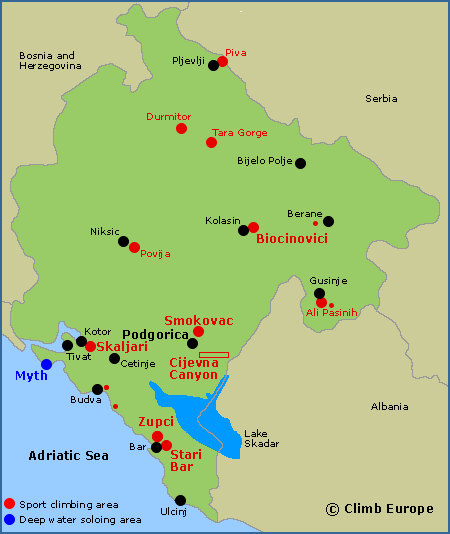
Around the town of Bar are 2 large crags called Zupci and Stari Bar. Zupci has routes across a wide range of grades, from easy slabs to steep athletic tufas, that are some of the longest in Montenegro offering some exceptional routes at F7b and above. The routes at Stari Bar are also steep, with overhanging endurance routes on mostly good holds.
Along the Luštica Peninsula to the south of Tivat there are towering limestone cliffs rising directly from the Adriatic Sea. This rugged coastline and deep canyons offer some excellent deep water soloing (DWS), with the largest developed area called Myth Crag, and a smaller area called Blue Crag. Many of routes are safe with low cruxes with clean falls into deep water, and are easily accessible via paddle boards.
The best time of year to go Deep Water Soloing is from late May to early October, when the Adriatic Sea is warm and the weather is stable. During these months the sea temperature usually ranges from 22 to 27 degrees Celsius, allowing for long climbing sessions and pleasant falls into the sea.
There is a separate guidebook called Deep Water Soloing for Luštica that is available to buy from our shop.
Sport climbing in the mountains of northern Montenegro
Within the mountains of northern Montenegro there are a number of established sport climbing areas, with Biočinovići and Piva being the largest.
The climbing at Lake Piva offers around 60 routes, mainly in the F5’s and F6’s grade range, whilst the style of the climbing is mostly on slabs, corners and cracks.
The crag of Biočinovići is located near the small mountain town of Kolašin, and offers enjoyable, mostly vertical face climbing with interesting features. Here there are over 50 routes on good quality limestone rock and offer technical and fingery climbing across a wide range of grades.
Tara Gorge is one of the most impressive features in Montenegro and is a popular tourism destination. There are over 30 routes here, though the potential for new routes is huge with an abundance of walls on both sides of the gorge.
Other significant crags include:
- Durmitor is an impressive mountain massif and is the highest mountain in Montenegro at 2,522m. Here there are 3 crags located offering over 50 routes.
- Just outside of the city of Nikšić is Povija crag, located near the famous Ostrog Monastery.
- There are 3 crags just south of Gusinje, with Ali Pasinih being the largest offering nearly 30 routes.
Montenegro climbing logistics and Beta
Montenegro climbing guidebooks. The Montenegro Sport Climbing Guidebook covers all the sport climbing areas in Montenegro that are described in this article. A separate Deep Water Soloing Guidebook for Luštica covers the DWS at Myth Crag and Blue Crag.
Montenegro Climbing season – Generally the best time of the year to climb in Montenegro is in the spring and autumn. Some crags offer year-round climbing whilst the crags in the mountains it is possible to climb in the summer months.
Getting to Montenegro – There are 2 international airports in Montenegro, called Podgorica Airport and Tivat Airport.